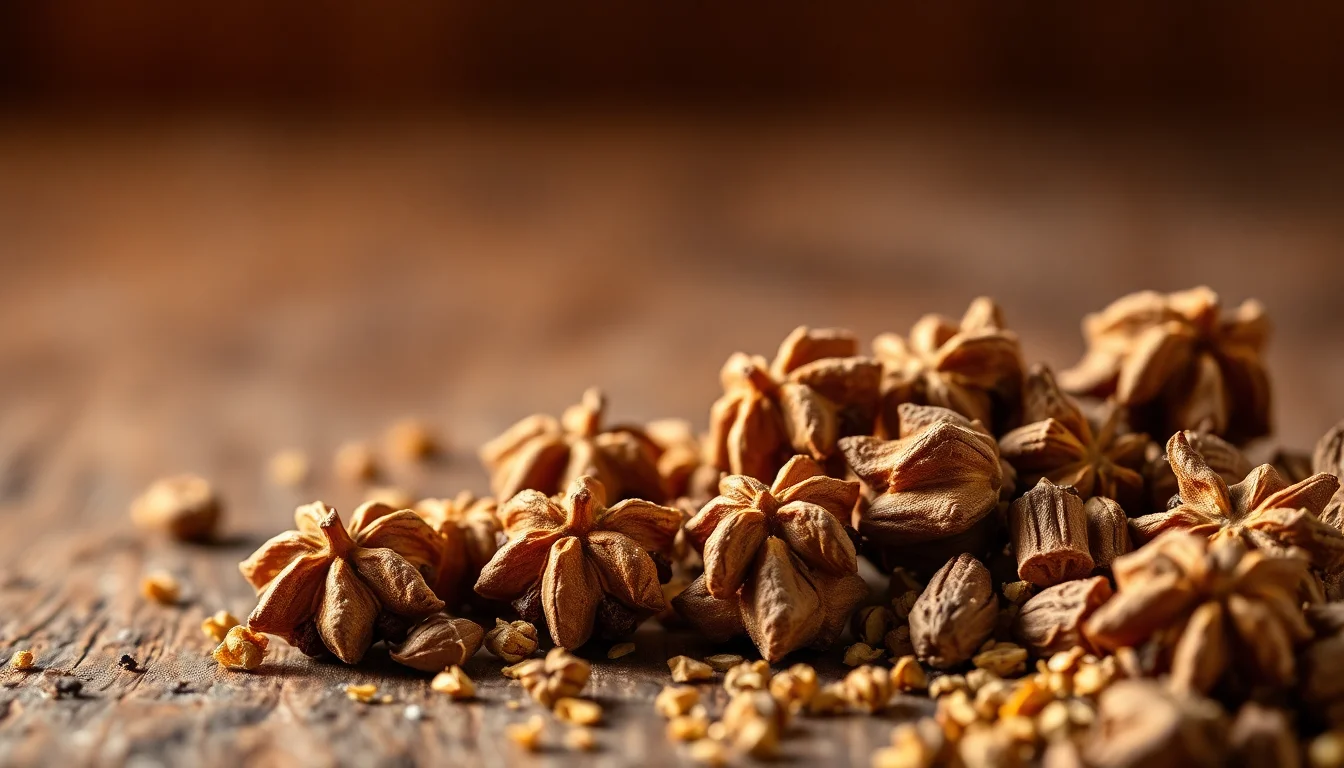
Mace absolute (CAS 8007-12-3) — Spicy Heart Note Fragrance Ingredient
Mace absolute
CAS 8007-12-3
What Is Mace absolute?
Mace absolute is a rare, luxurious extract derived from the aril (red covering) of nutmeg seeds. It’s found in niche perfumes and gourmand fragrances, often paired with spices or woods. This ingredient matters because it adds a warm, complex spiciness that’s more refined than common nutmeg oil, creating depth in oriental and amber compositions.
Safety Profile
USE WITH AWARENESSWhat Does Mace absolute Smell Like?
Mace absolute unfolds with an initial burst of warm, peppery spice—like freshly cracked nutmeg with cinnamon undertones. The heart reveals a creamy, almost floral sweetness reminiscent of carnations dipped in honey. Dry-down brings resinous depth with hints of dried fruits and polished wood. Unlike nutmeg oil, it lacks sharpness, instead offering a velvety texture that blends seamlessly into oriental bases.
In Famous Fragrances
Fragrance associations may not reflect actual formulations.
Mace absolute amplifies the fragrance’s signature cinnamon-clove accord while adding a smooth, rounded quality that prevents the spice notes from becoming harsh.
Used sparingly to bridge the gap between the amber base and top notes of bay leaf, creating a seamless transition with its warm-resinous character.
Chemistry, Properties & Perfumer Guide
The Chemistry
Mace absolute contains a complex mixture of terpenes and phenylpropanoids, including myristicin (30-40%), elemicin, and safrole derivatives. These compounds are extracted via solvent extraction from the dried arils of Myristica fragrans. The absolute differs from nutmeg oil by retaining heavier, less volatile compounds that contribute to its creamier olfactory profile.
Physical & Chemical Properties
| Appearance | Viscous orange-brown liquid |
|---|---|
| Solubility | Soluble in alcohol, insoluble in water |
Perfumer Guide
| Application | Typical % | Range | Notes |
|---|---|---|---|
| Fine Fragrance | 0.5-2% | Up to 3% | Used as a spice modifier |
| Home Fragrance | 0.1-0.5% | Up to 1% | Adds warmth to candle blends |
Classic Accords
Tip: Bloom in alcohol before adding to prevent cloudiness in final formulations.
Alternatives & Comparisons
Provides similar spice notes without safrole concerns, though lacks mace’s floral-creamy nuances.
Safety, Regulatory & Sustainability
⚠ Regulatory Disclaimer
General reference only. Consult current IFRA Standards Library before formulating.
IFRA Status
Restricted to 0.5% in leave-on products due to safrole content (IFRA Amendment 49).
EU Allergen Declaration
Contains isoeugenol (>0.001%) – must be declared under EU regulation.
GHS Classification
RIFM Assessment
RIFM evaluation confirms safe use at IFRA limits with no phototoxicity concerns.
Sustainability
Mace production is labor-intensive as each nutmeg yields only one aril. Sustainable sourcing focuses on Indonesian farms practicing intercropping. Synthetic alternatives exist but lack the complexity of natural absolute.
Explore Mace absolute
Browse essential oils and aroma compounds.
Browse on iHerb →Affiliate disclosure: we may earn a small commission at no extra cost to you.
References
- Lawrence (2011). Progress in Essential Oils: Nutmeg and Mace. Perfumer & Flavorist. Trade Journal
Data: PubChem (NIH), PubMed, RIFM, IFRA. Last reviewed: Apr 2026.
Report a data errorIngredient Data Sheet
CAS 8007-12-3Odor & Flavor
| See above, Nutmeg.📖 Fenaroli |
Regulatory Status
| IOFI Classification | Natural📖 Fenaroli |
Physical data: PubChem (NIH/NLM), U.S. EPA CompTox Dashboard, EPA OPERA models, RDKit. Odor & flavor: Arctander (Perfume & Flavor Chemicals), Fenaroli's Handbook of Flavor Ingredients, Leffingwell. Thresholds: van Gemert (Compilations of Odour Threshold Values). Regulatory: IFRA Standards 51st, FEMA GRAS. Trade names: Surburg (Common Fragrance & Flavor Materials). All data compiled and cross-referenced for perfumertools.com.
Related Research
- 1,3-Propanedione, 1-[4-(1,1-dimethylethyl)phenyl]-3-(4-methoxyphenyl)- (CAS 70356-09-01) — Sweet Middle Note Fragrance Ingredient
- Piperonyl acetate (CAS 326-61-4) — Floral Middle Note Fragrance Ingredient
- Phenol, 4-chloro-3,5-dimethyl- (CAS 88-04-0) — Balsamic Base Note Fragrance Ingredient
- 2,5-Octadien-4-one, 5,6,7-trimethyl-, (2E,5Z)- (CAS 357650-26-1) — Green Top to Heart Note Fragrance Ingredient